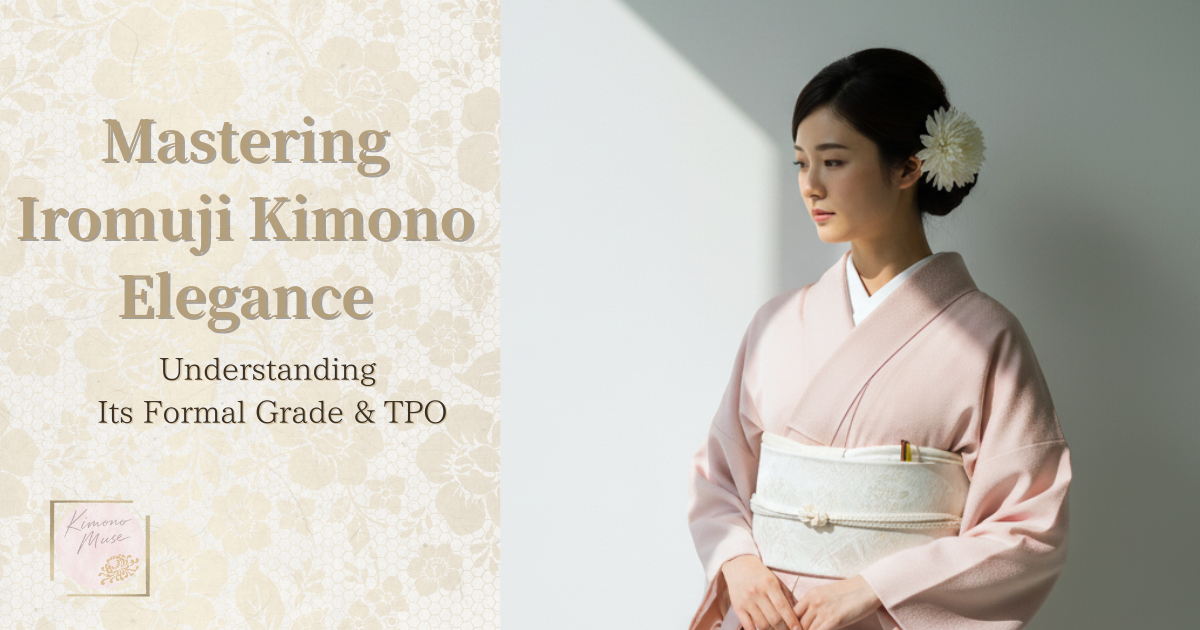
If you’ve been exploring the world of kimono, you’ve probably come across the term iromuji (色無地).
It’s often described as “the most versatile kimono you can own” — and for good reason.
But once you start looking into it, questions come up fast: What makes it formal? Do I need a family crest?
What’s the difference between one crest and three?
Here’s the key: an iromuji kimono can range from casual everyday wear all the way to formal ceremonial dress — and what determines that is the number of kamon (家紋), or family crests, placed on the garment.
In this guide, we’ll walk you through everything you need to know about iromuji: what it is, how formality works, when to wear it, and how to choose your first one.
What Is Iromuji?
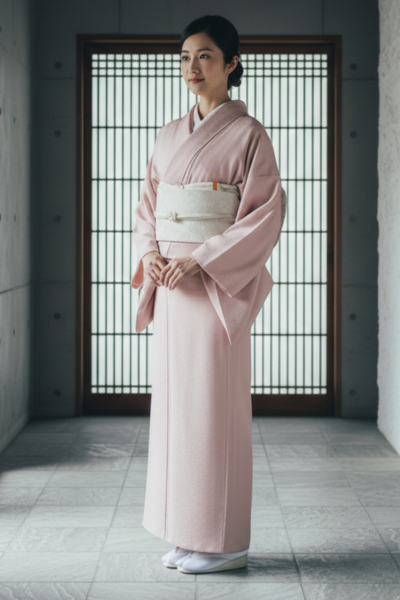
First, let’s take a look at the basics of what an Iromuji kimono is.
Once you understand the differences between an Iromuji, a Houmongi, and a Komon, you’ll begin to see why the Iromuji is often called one of the most versatile types of kimono.
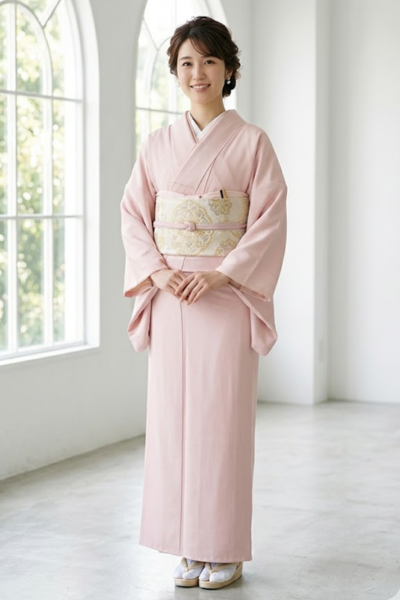
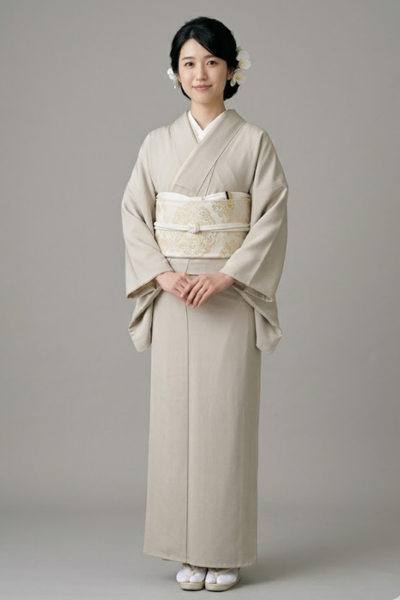
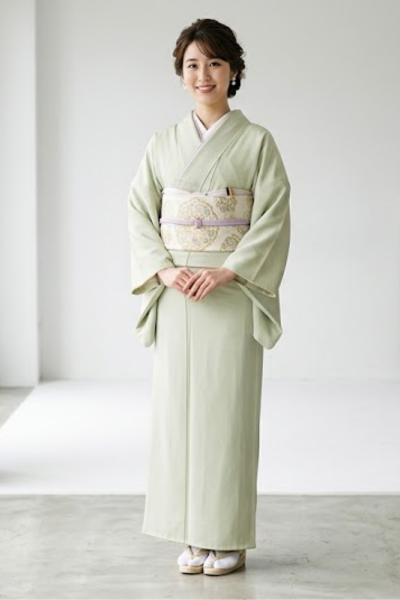
✿A Solid-Color Kimono with No Pattern
Iromuji (色無地) literally means “colored, no pattern.” It’s a kimono dyed in a single solid color — any color except black — with no surface design.
At first glance, it might seem too plain. But that simplicity is exactly what makes it so powerful: paired with the right obi (sash) and accessories, a single iromuji can take you from a formal tea ceremony to a casual lunch with friends.
✿Jimon: The Hidden Texture That Changes Everything
Look closely at an iromuji and you might notice a subtle woven design in the fabric itself. This is called jimon (地紋) — a pattern built into the weave rather than dyed onto the surface.
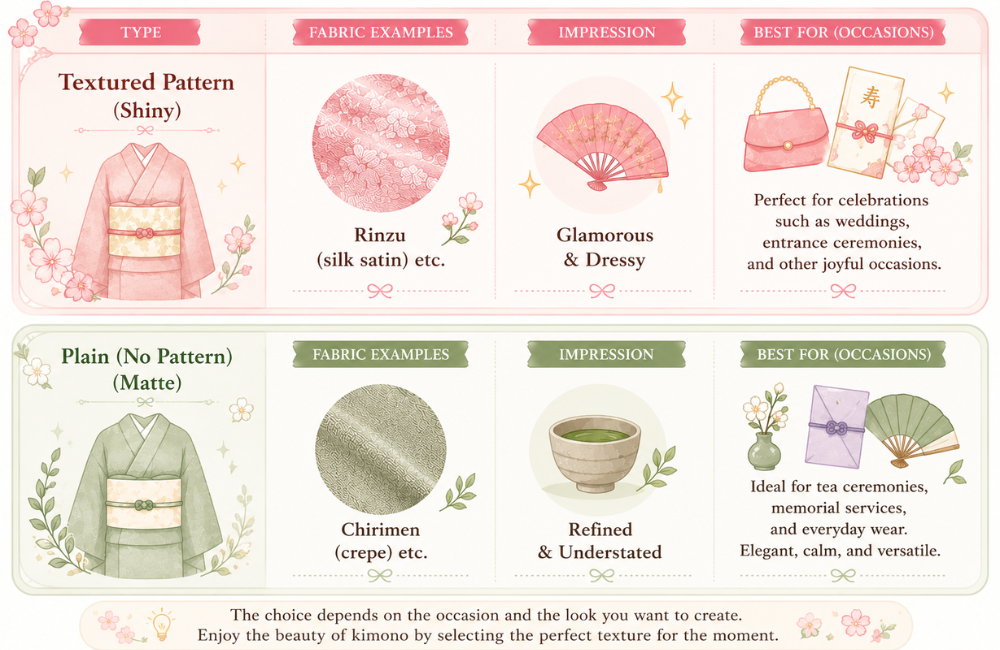
Tip for first-timers: If you’re not sure which to choose, go for a lustrous jimon fabric — it’s the more versatile option for formal occasions.
✿Why Can a Plain Kimono Be Formal?
In Western fashion, plain often means casual. In Japan, it’s the opposite — solid, undecorated garments have historically been associated with dignity and formality.
In the Imperial Court and samurai households before the Meiji era (pre-1868), plain robes were considered proper formal dress.
That tradition carries through to today: add a family crest to an iromuji, and it becomes perfectly appropriate for formal occasions.
The Key to Iromuji Formality: Kamon (Family Crests)
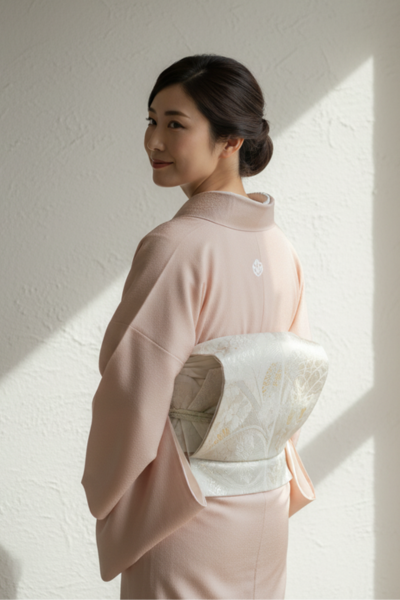
The biggest reason why the Iromuji is considered so versatile lies in its mon (family crest).
This is the most important point to understand when wearing an Iromuji kimono, and the one that requires the most attention.
The formality of an Iromuji changes dramatically depending on how many crests are added — or whether no crest is added at all.
✿What Is a Kamon?
A kamon (家紋) is a family crest — a symbol that has been passed down through Japanese families for centuries, similar in concept to a European coat of arms. On a kimono, it’s placed on the back, sleeves, and/or chest.
A kimono bearing crests is called montsuki (紋付), and the more crests it has, the more formal it becomes.
The way a crest is rendered also affects formality. As a general rule: the whiter and more prominent the crest, the more formal.
| Type | Technique & Characteristics | Formality & Impression | Typical Use / TPO |
|---|---|---|---|
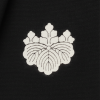 Dyed Crest (Some-nuki Mon) Dyed Crest (Some-nuki Mon) | The design is created by resist-dyeing the background, leaving the crest area white. Considered the most formal technique. | Highest level of formality. | Formal ceremonial attire such as kurotomesode or mourning kimono. |
 Hinata Mon Hinata Mon | Both the outline and the inside of the crest are resist-dyed in white. | Extremely formal, equal to the some-nuki mon. | Worn for formal or ceremonial kimono like kurotomesode and mourning wear. |
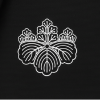 Kage Mon Kage Mon | Only the outline of the crest is resist-dyed in white, leaving the inside in the kimono’s color. | Slightly less formal and more subdued than the hinata mon; refined and elegant. | Suitable for semi-formal or less formal ceremonial occasions. |
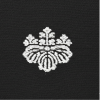 Embroidered Crest (Nui Mon) Embroidered Crest (Nui Mon) | The crest is represented through embroidery instead of dyeing. | Less formal than the dyed crest; slightly more casual and decorative. | Common on fashionable kimono, houmongi, and iromuji for stylish occasions. |
For weddings, graduation ceremonies, or similar semi-formal events, many people choose the subtler kage-mon or decorative nui-mon rather than the most formal hinata-mon.
✿The Number of Crests = The Level of Formality
This is the most important rule in iromuji:
More crests = more formal. No crests = casual.
The same pale pink iromuji becomes a full formal garment with five crests — or a relaxed everyday outfit with none. Same kimono, completely different occasion.
Formality by Crest Count
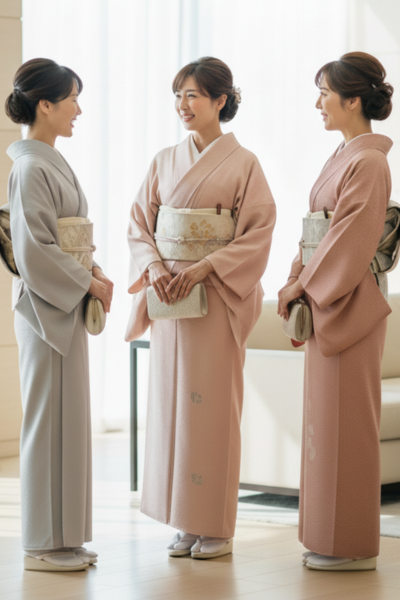
Iromuji kimono are divided into four types based on the number of crests, and each type has its own level of formality and appropriate occasions to wear it.
Let’s take a look at them in order, starting from the most formal.
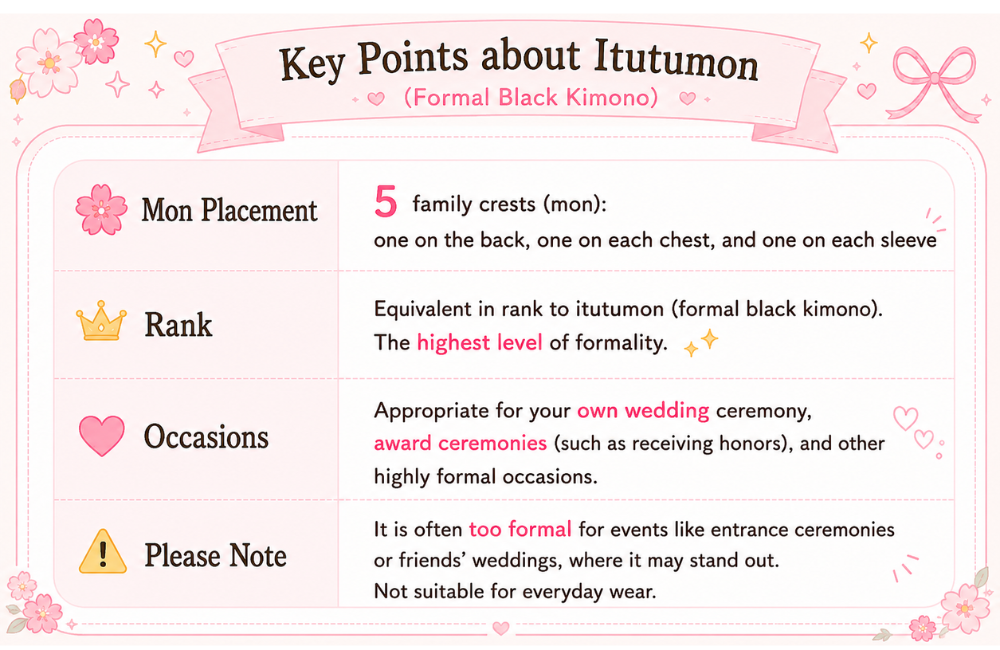
Five Crests (Itsutsumon): The Highest Level of Formal Wear
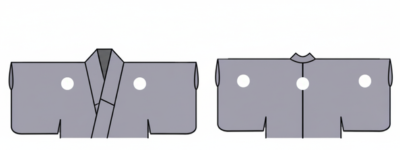
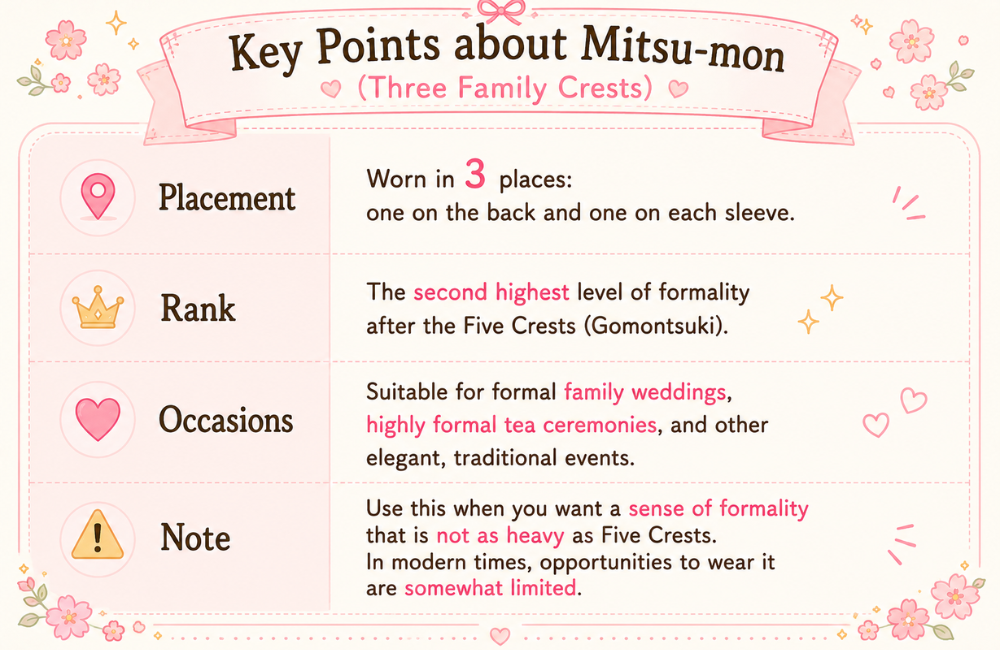
Three Crests (Mitsumon): Elegant Semi-Formal Wear
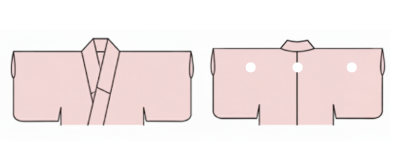
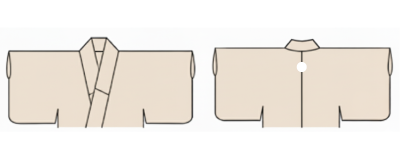
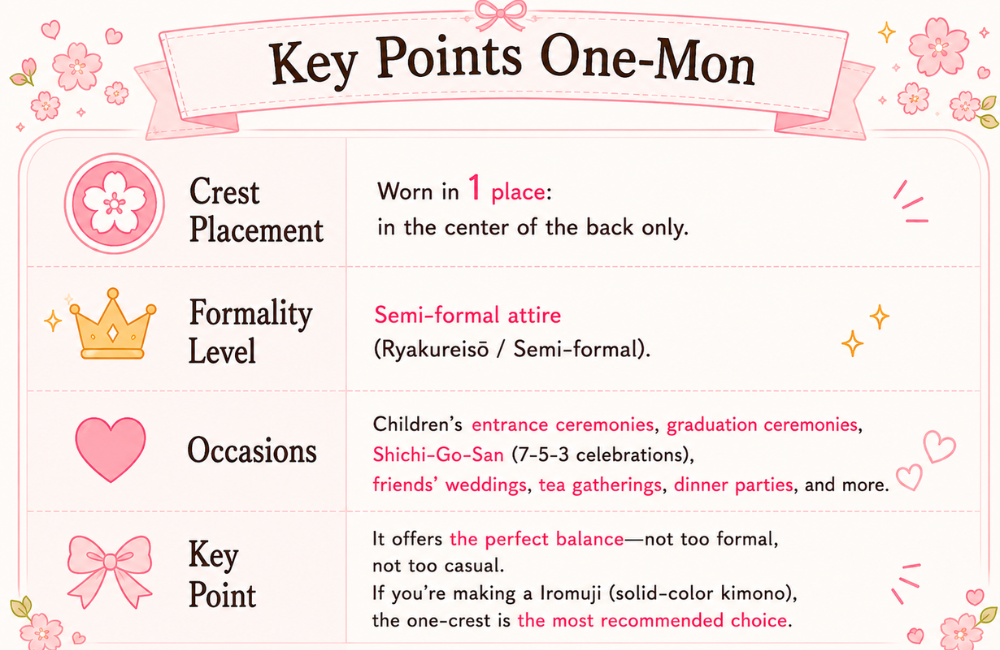
One Crest (Hitotsumon): The Most Versatile Choice
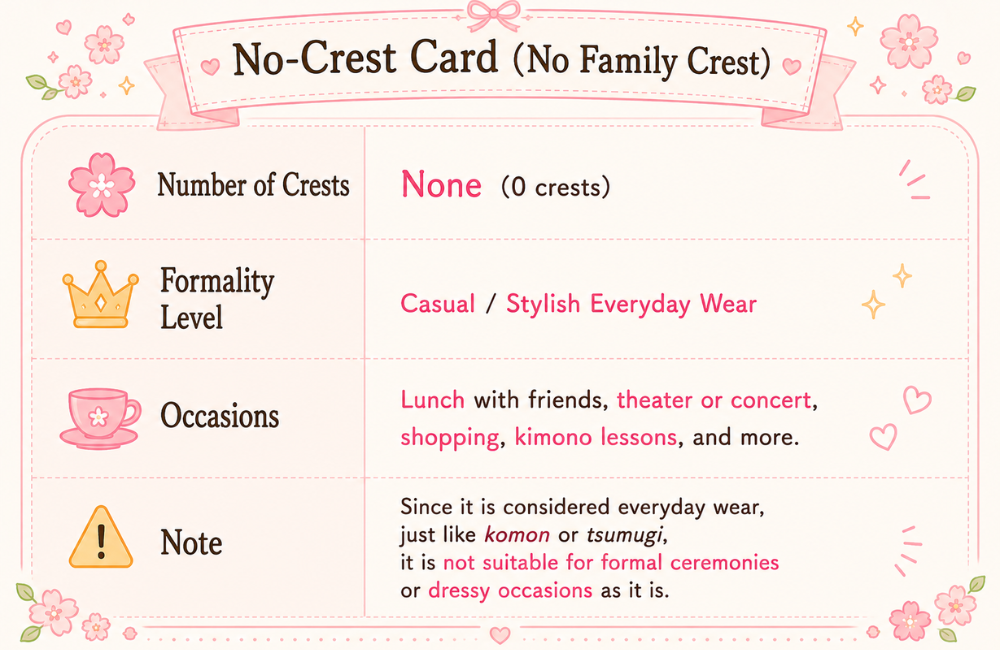
No Crest (Mon-nashi): Free and Stylish Casual Wear

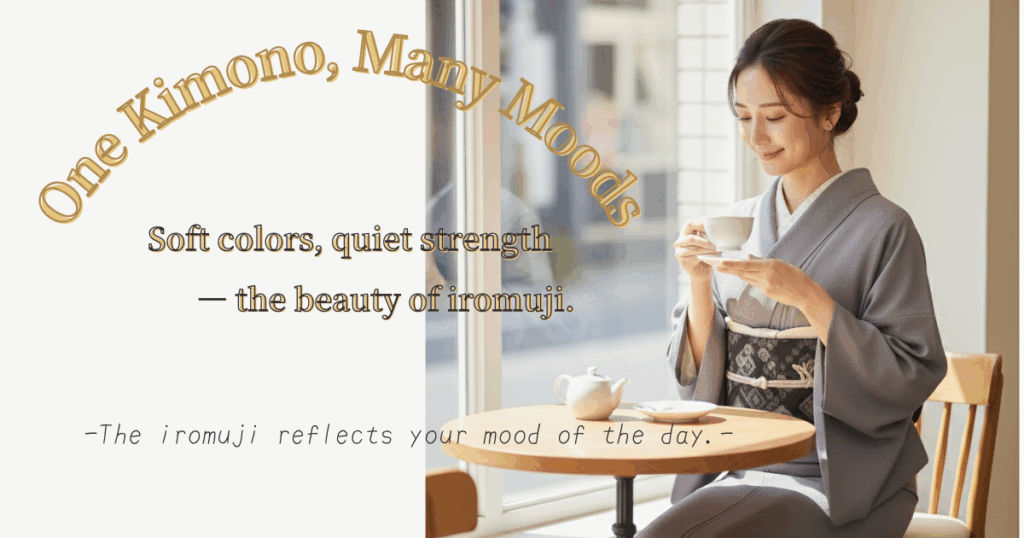
Styling One Iromuji Many Ways
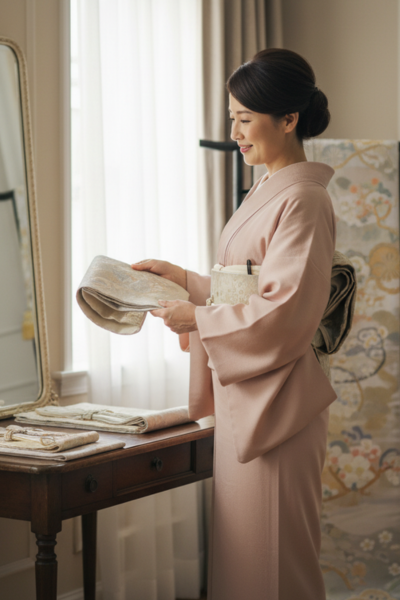
The real magic of iromuji is its transformability. Swap the obi and accessories, and the same kimono looks completely different — from solemn and ceremonial to playful and fashionable.
We cover specific outfit combinations and obi-pairing rules in detail in our styling guide:
How to Choose Your First Iromuji
“Not sure how to choose your first Iromuji without making a mistake?”
To help ease those worries, here are three simple guides to choosing the right one.
Step 1: Start with When You Want to Wear It
The most important question is: what occasion are you dressing for?
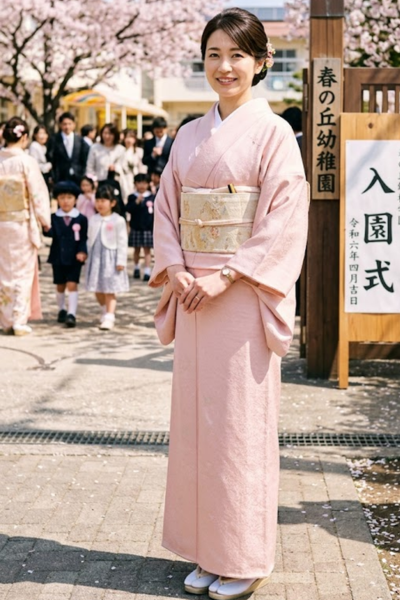
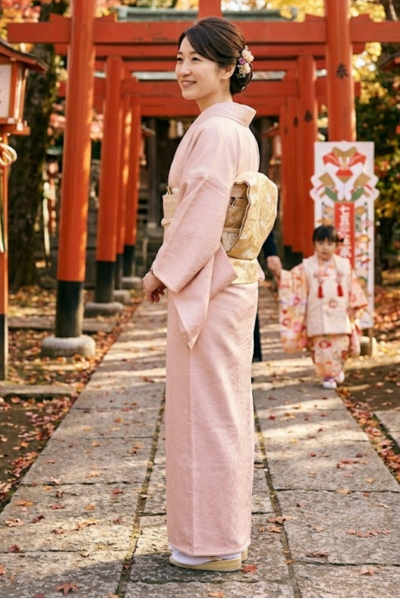
For school ceremonies, coming-of-age events, or a friend’s wedding, the answer is straightforward:
Crests: One crest (hitotsu-mon)
Jimon: An auspicious woven pattern (celebratory motifs)
This combination covers the widest range of semi-formal occasions and is the smartest starting point for most people.
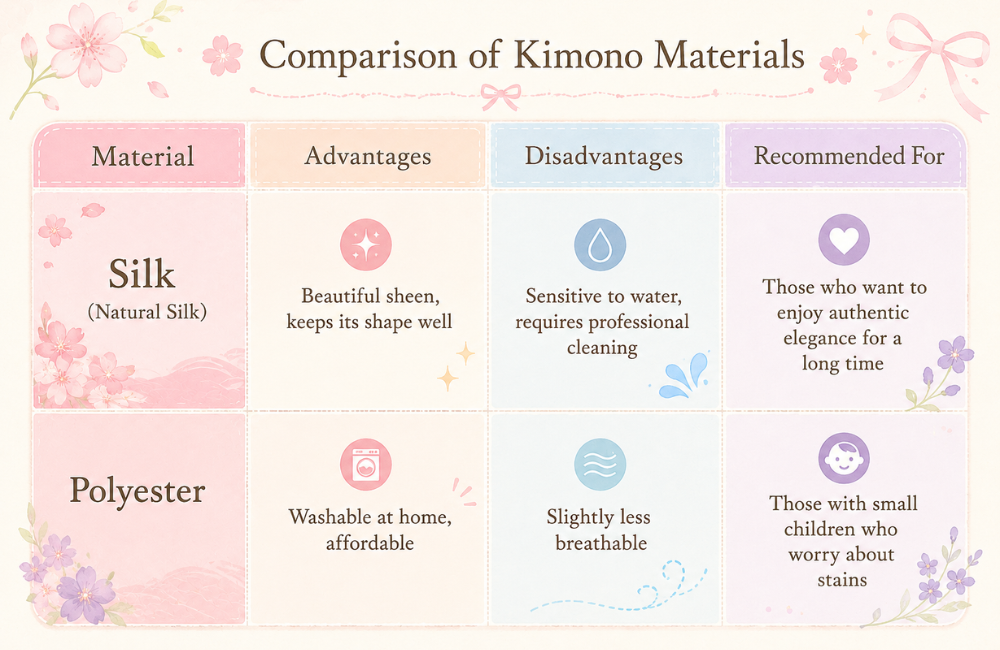
Step 2: Choose Your Fabric Based on Budget and Lifestyle
Kimono fabrics are broadly divided into two types: shōken (pure silk) and synthetic fabrics.
Choose the one that best suits your lifestyle and needs.
Step 3: Pick a Color You’ll Love for Years
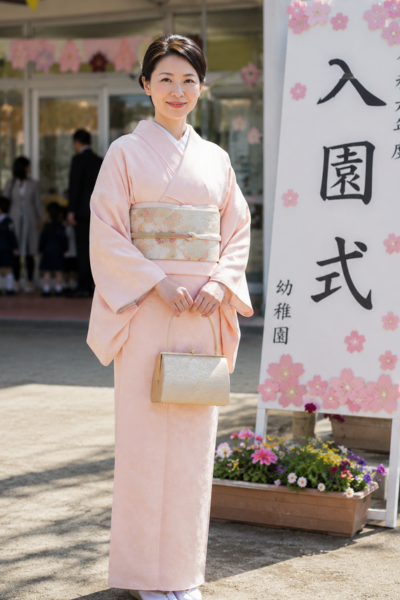
✿4 Recommended Colors
Pink (salmon, cherry blossom):
Brightens the complexion, perfect for celebrations, great in photos
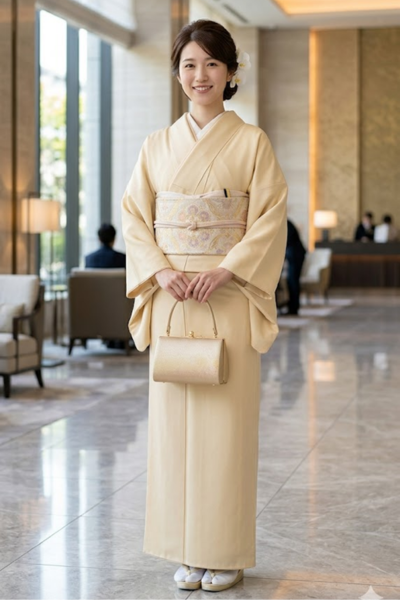
Cream / beige:
Goes with almost any obi color — the ultimate neutral
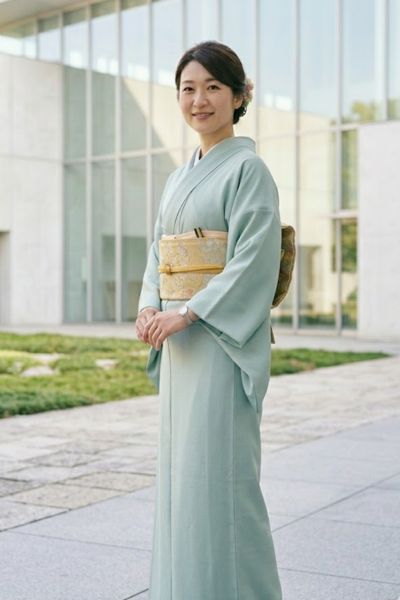
Pale blue / sage green:
Fresh and clean, ideal for spring and early summer events
Wisteria (soft purple):
Elegant and timeless — a color that ages beautifully with you
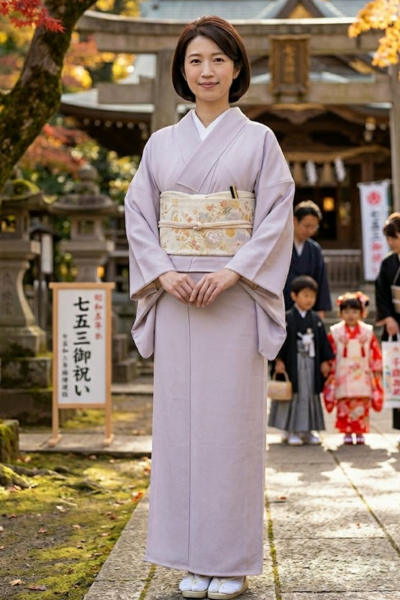
A note on darker colors: Deep purple, forest green, and grey can read as mourning colors depending on how they’re styled. For your first kimono, lighter tones are a safer and more celebratory choice.
FAQ
Q: Is every solid-color kimono called iromuji?
A: Not quite. The fabric and weave matter too. Edo komon, for example, looks solid from a distance but has tiny repeating patterns up close — with a crest, it can be worn semi-formally, much like iromuji. Tsumugi (woven silk with a textured surface), on the other hand, is always casual regardless of color. A simple rule of thumb: smooth and lustrous = more formal; textured and matte = more casual.
Q: What type of crest should I get?
A: For most semi-formal occasions, one crest is ideal. The most formal technique is hinata-mon (fully white dyed crest), but the subtler kage-mon (outline only) or decorative nui-mon (embroidered) are increasingly popular for their understated elegance.
Q: Can I rent an iromuji instead of buying?
A: Absolutely. Rental kimono shops — including online services — often offer full sets including the iromuji, obi, accessories, and footwear. It’s a great option if you want to try before you buy, or if you only need it for one occasion. Just make sure the rental includes one crest if you need it for a formal event.
Q: Can I wear a lined (awase) iromuji to a June or September wedding?
A: Technically, no — Japanese kimono etiquette calls for an unlined hitoe kimono in June and September, and a sheer usumono in July and August. In practice, modern venues with strong air conditioning make lined kimono more tolerable out of season. That said, knowledgeable guests may notice, and outdoor photos can be uncomfortable. When in doubt, follow the seasonal rule.
For a deeper look into kimono “koromogae” — the seasonal wardrobe change —
and how to dress beautifully through spring, summer, autumn, and winter,
you can find a detailed explanation in the article below:
👉 Related article:
Kimono Seasonal Changes| Guide to Dressing for All Four Seasons

Summary: Know the Crests, Know the Occasion
The secret to wearing iromuji well comes down to two things: crests and occasion.
Here’s a quick reference to keep:
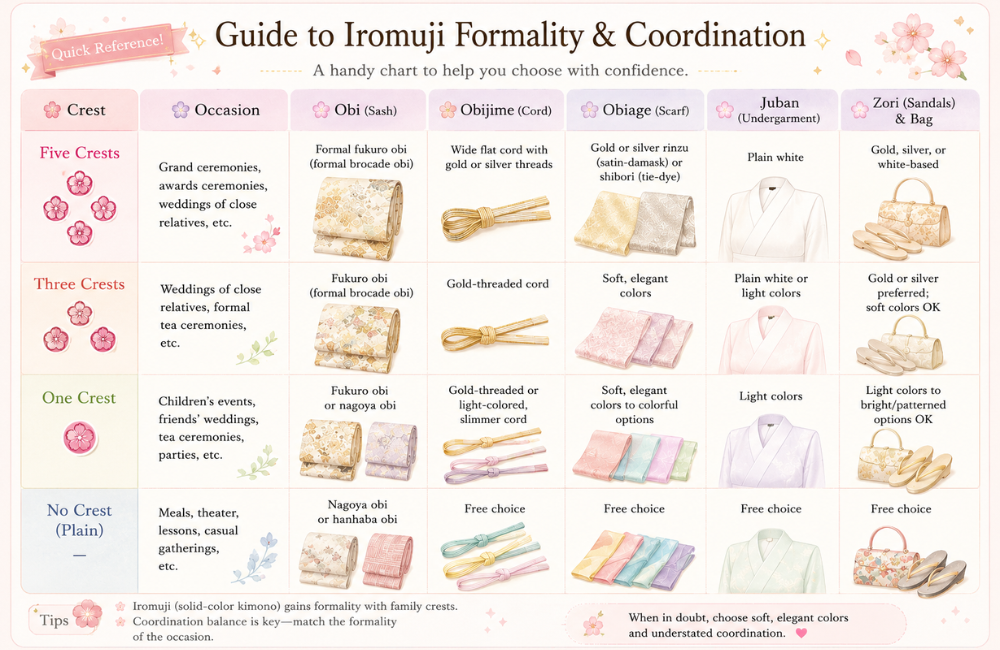
An iromuji with one crest is one of the most practical investments in a kimono wardrobe — formal enough for life’s meaningful moments, simple enough to style in countless ways.
We hope this guide helps you find the perfect piece to start your kimono journey. 🌸
Need Personal Advice?
Have questions about yukata, obi, or kimono styling?
Feel free to contact Kimono Muse.