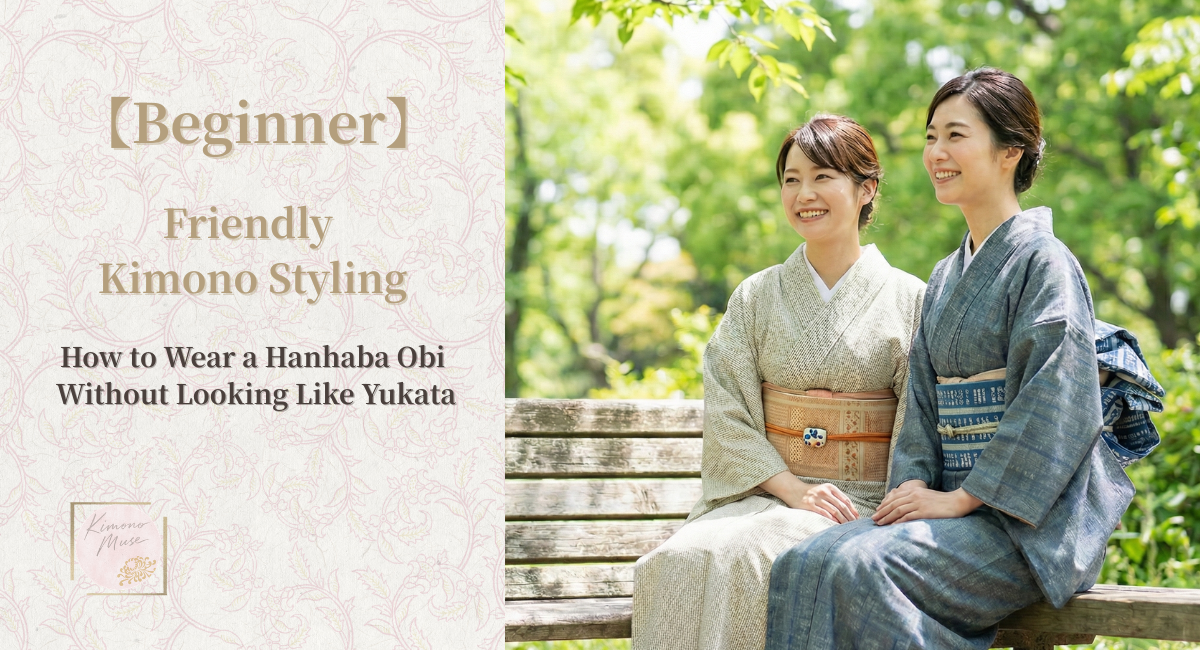
“I’d like to wear a hanhaba obi with my kimono, but is that considered improper?”
“Will it look too much like a yukata, or feel a bit childish…?”
Many people hesitate to try a hanhaba obi because of these concerns.
In fact, the hanhaba obi is one of the best companions for everyday kimono worn by adults.
In this article, we gently explain where the line is between kimono that pair well with a hanhaba obi and those that do not, along with practical tips to achieve an elegant, mature look.
By the end, you’ll feel confident thinking,
“Today feels like a relaxed lunch outing — a perfect day for a hanhaba obi.”
- Is It Wrong to Wear a Hanhaba Obi with Kimono?
- What to Know: Kimono That Pair Well with a Hanhaba Obi — and Those That Don’t
- Why You Might Be Giving Off “Yukata Vibes”
- Seasonal Fabric Rules: Is Your Obi Out of Season?
- How Adults Can Wear a Hanhaba Obi Without Looking Childish
- The Best Knot Styles for a Grown-Up Kimono Look
- A Simple Step-by-Step Styling Checklist
- How to Read the Room: TPO Made Easy
- Wrap-Up
Is It Wrong to Wear a Hanhaba Obi with Kimono?
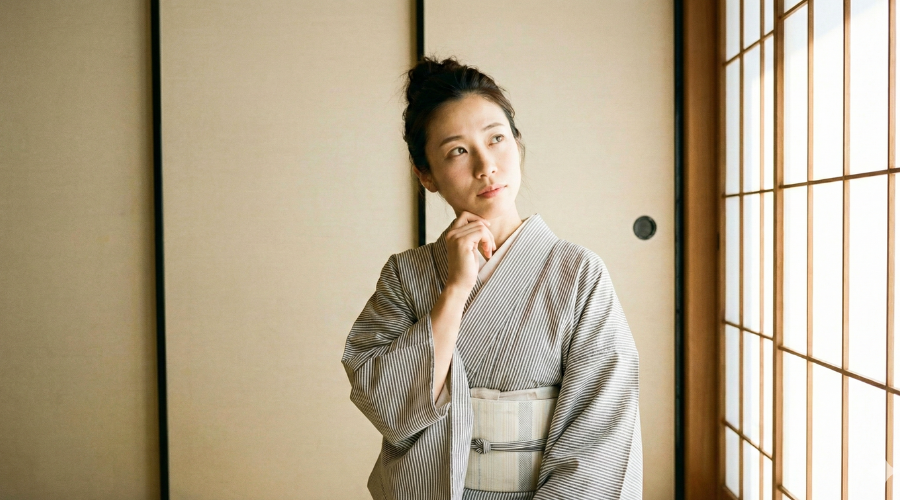
To answer the question clearly: there is nothing wrong at all with wearing a hanhaba obi with kimono.
In fact, the hanhaba obi is a traditional everyday obi, historically made to be worn with casual kimono such as tsumugi and komon.
The common idea that “hanhaba obi are only for yukata in summer” comes simply from modern experience. Today, many people wear yukata more often than kimono, which has led to this misunderstanding.
While a hanhaba obi is not suitable for formal occasions such as weddings or fine dining, it is perfectly appropriate for private, everyday outings — lunch with friends, the theater, or shopping — and can be enjoyed comfortably throughout the year.
What to Know: Kimono That Pair Well with a Hanhaba Obi — and Those That Don’t
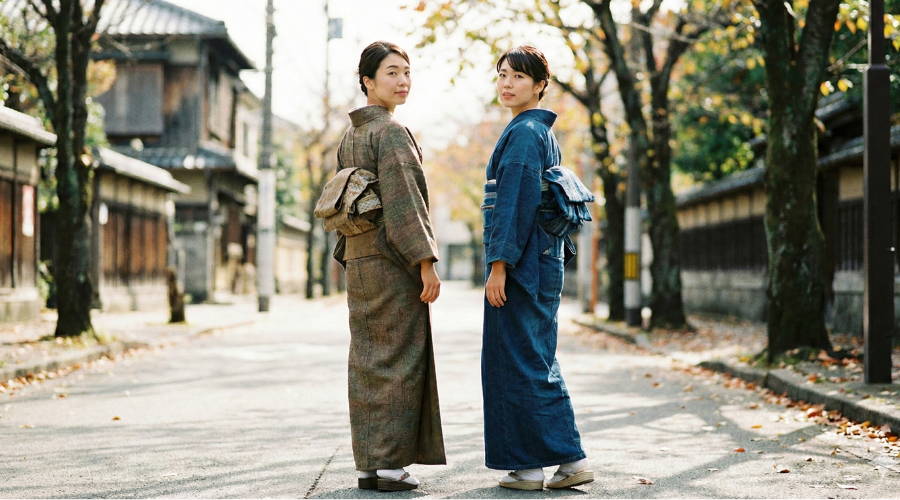
The biggest reason a hanhaba obi might look “off” isn’t actually about how you tie it — it’s about mismatching the formality level of your kimono and obi.
Here’s a quick guide:
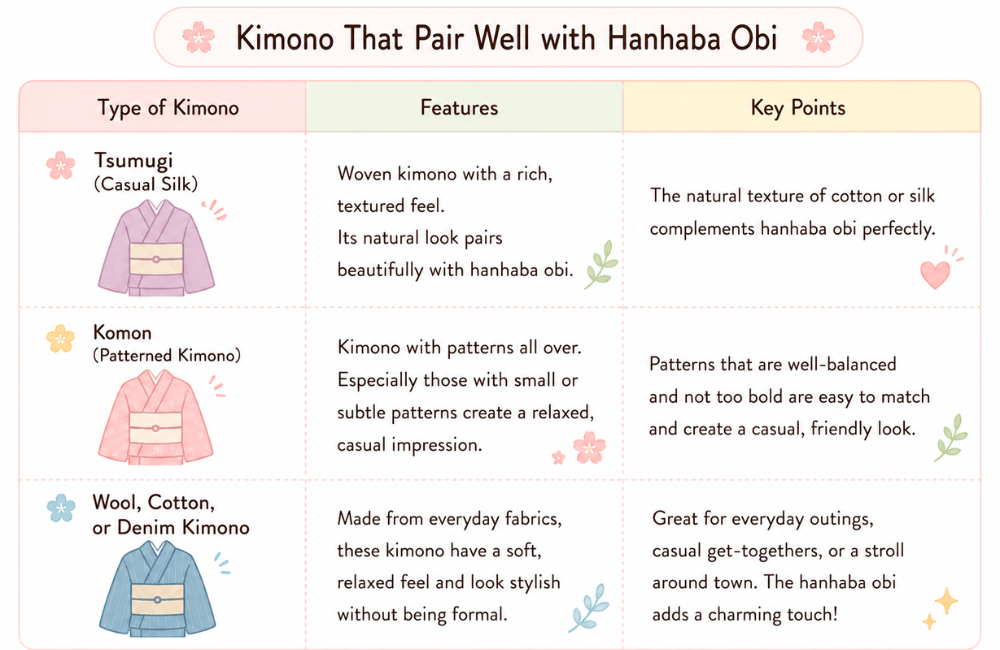
◆Kimono styles that pair beautifully with a hanhaba obi
These are all casual, everyday kimono — a hanhaba obi is a natural match.
- Tsumugi (紬): Woven silk with a natural, textured feel. The rustic quality pairs wonderfully with a hanhaba obi.
- Komon (小紋): Kimono with an all-over repeat pattern. Especially the finer, more understated patterns work beautifully.
- Wool, cotton, and denim kimono: These are everyday fabrics by nature, and honestly, a hanhaba obi balances them better than a formal nagoya obi (the kind used for otaiko knots)
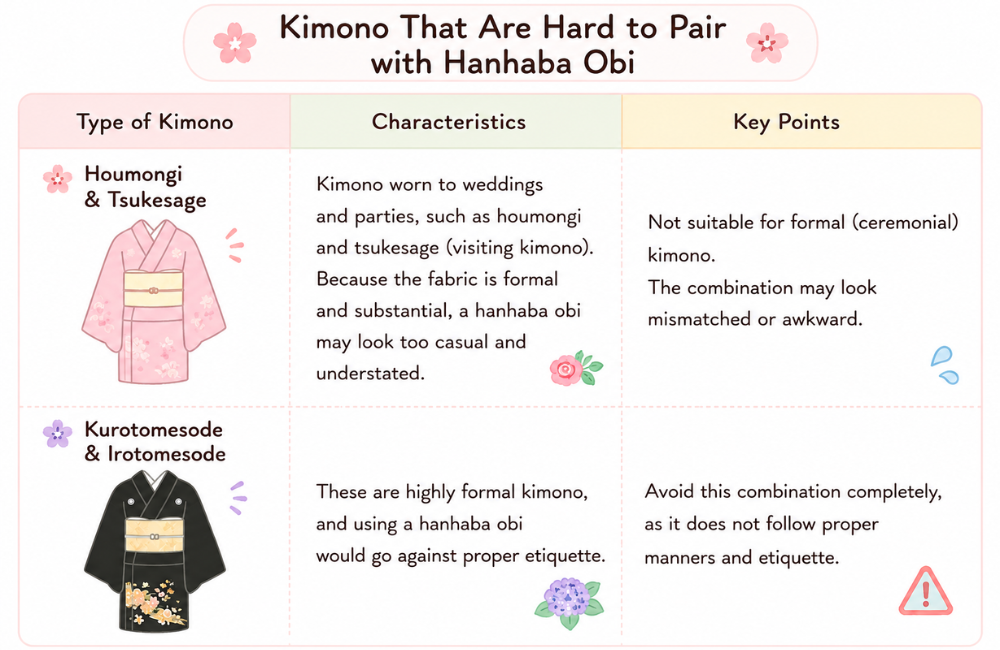
◆Kimono styles to avoid pairing with a hanhaba obi
Formal kimono and hanhaba obi are a mismatched pair — it ends up looking awkward on both sides.
- Hōmongi (訪問着) and tsukesage (付け下げ): These are “going out” kimono for weddings and formal parties. The weighty fabric calls for a more substantial obi.
- Tomesode (留袖): Pairing these with a hanhaba obi is considered a serious style violation.
Why You Might Be Giving Off “Yukata Vibes”
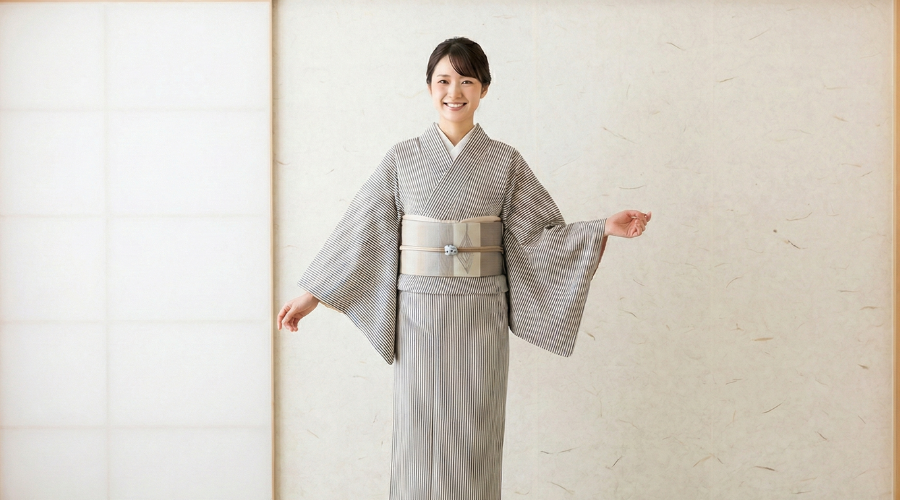
“I’m wearing a kimono, so why does it look like a yukata…?”
If this sounds familiar, the cause usually comes down to one (or more) of these three things:
✿① Your obi fabric is meant for yukata only
Not all hanhaba obi are created equal — fabric weight and texture matter a lot.
Single-layer obi (NG ❌)
Thin, unlined obi (the kind that often come in yukata sets) look flimsy against the heavier fabric of a kimono. This single biggest thing that gives off “yukata vibes.”
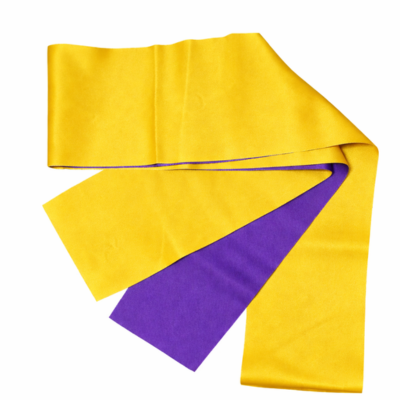
Kobukuro obi / structured obi (OK ✅)
For kimono, choose an obi with some body to it — like a kobukuro obi (double-layered, sewn together at the edges) or a Hakata-ori weave. Look for something with a bit of stiffness and substance.
✿② Your han-eri (half-collar) isn’t showing
This is one of the most telling differences between kimono and yukata: the han-eri, or decorative half-collar.
Yukata is worn directly against the skin. Kimono is layered over a nagajuban (under-kimono), with the han-eri peeking out at the neckline — and that layered look is what makes it read as kimono, even with a casual hanhaba obi.
For everyday wear, you don’t need a plain white han-eri. A colored, patterned, or lace han-eri instantly gives off “I put a thoughtful outfit together” energy. If crisp white feels too formal, try something with a little personality — just that touch of color at the neckline erases the yukata look and adds a chic, grown-up quality to your whole outfit.
✿③ Your knot has too much volume
Yukata obi knots (like the bunko style) are designed to be big and fluffy at the back. Do the same thing with a kimono and it easily reads as childish or yukata-ish.
For everyday kimono as an adult, the goal is low-profile and close to the body — think flat and sleek rather than poofy and high.
Knots like karuta musubi or kai-no-kuchi are perfect examples: they lie flat against your back and give you that effortlessly cool, “I know what I’m doing” vibe.
Seasonal Fabric Rules: Is Your Obi Out of Season?
Just like you wouldn’t wear summer sandals in the snow, obi fabric follows seasonal rules too. Getting this wrong can make even a perfectly tied knot look off.
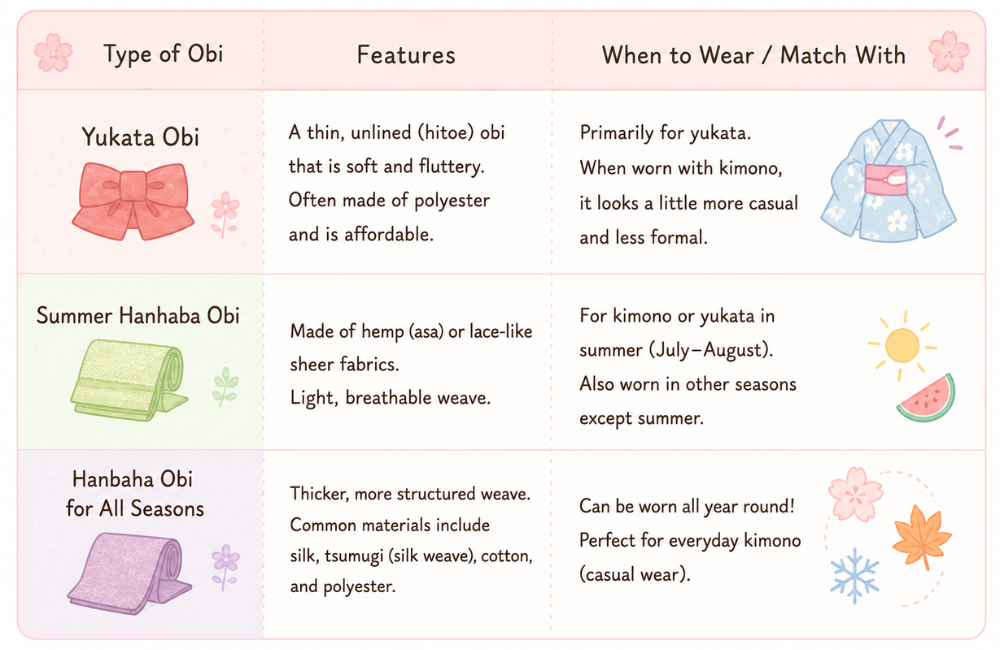
💡 Beginner’s tip:
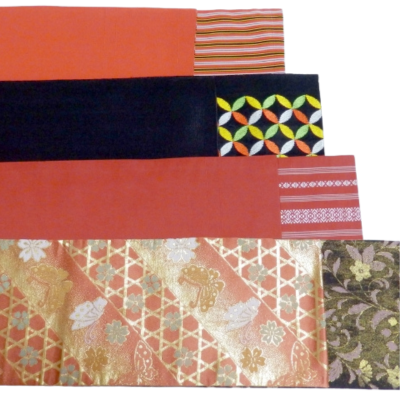
When in doubt, go for **Hakata-ori (博多織)**. The classic *kenjō* pattern (featuring geometric *dokko* motifs) works with both yukata and kimono, in every season. One good Hakata-ori obi in your collection and you’ll never be stuck for a pairing.
How Adults Can Wear a Hanhaba Obi Without Looking Childish
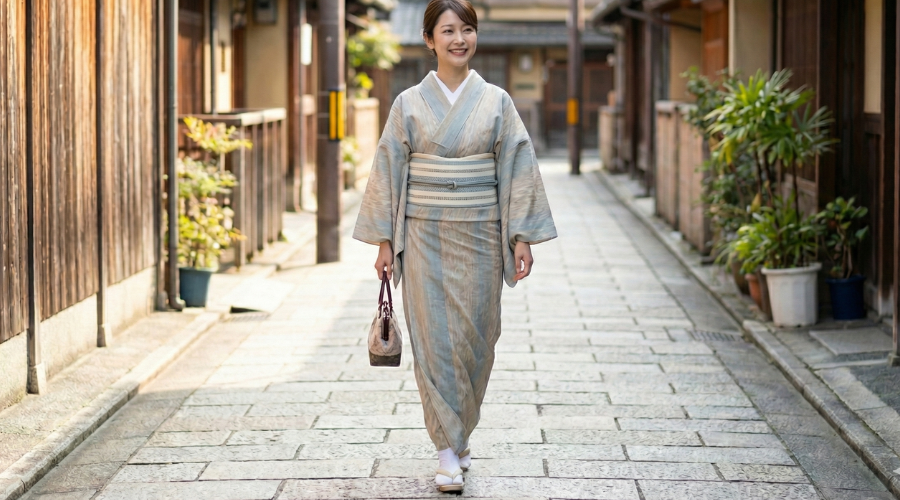
The key mindset shift for adult hanhaba obi styling: think “iki” (粋 — understated chic) over “kawaii (cute).”
Big, ribbon-like knots tied high on the back look youthful — which is lovely when you’re a teenager at a summer festival, but can look like you’re trying too hard as an adult.
What to aim for instead: a low, flat knot that sits close to your back.
Two simple things to keep in mind:
1.Keep the knot volume low
2.Position the obi slightly lower (not up near your chest)
Just these two adjustments create that こなれ感 — the Japanese word for looking effortlessly put-together, like you’ve been dressing this way for years.
The Best Knot Styles for a Grown-Up Kimono Look
If you’re just starting out, these three knots are the gold standard for adult everyday kimono:
1.Karuta musubi (カルタ結び): Completely flat — doesn’t get squashed when you sit down. Ideal for long days, car rides, or cinema dates.
2.Yano-ji musubi / Kichiya musubi (矢の字・吉弥結び): Has a small “tail” that resembles an otaiko knot — gives a neat, put-together impression. Great for komon outings.
3.Patapata musubi / Layer musubi (パタパタ結び): Uses a mitsujū karishimo (elastic tool) to create a layered, dynamic look. More volume than the others, but pairing it with an obijime keeps it sophisticated.
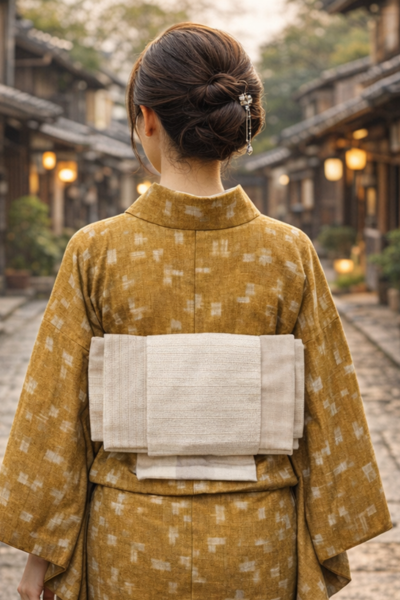
A flat obi knot that creates very little bulk, making it comfortable even when sitting.
It doesn’t get in the way when using chairs, so it’s especially practical for everyday outings.
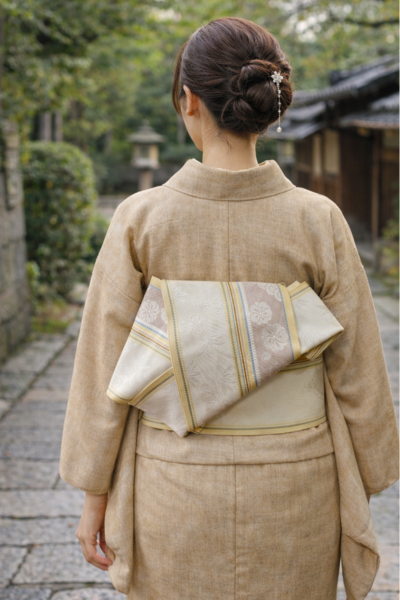
A well-balanced knot with moderate volume that creates a clean, composed look from the back.
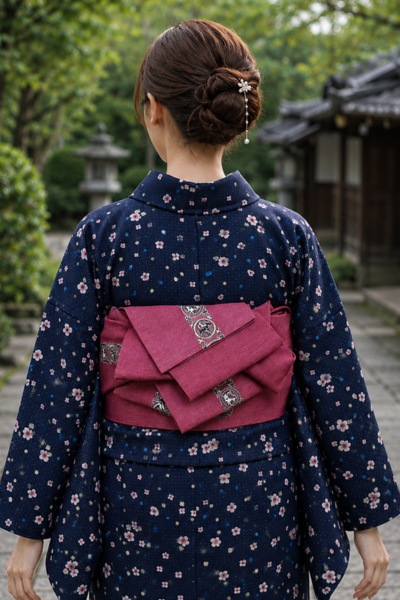
A three-dimensional knot that combines a touch of charm with ease of movement, making it both playful and practical.
A Simple Step-by-Step Styling Checklist
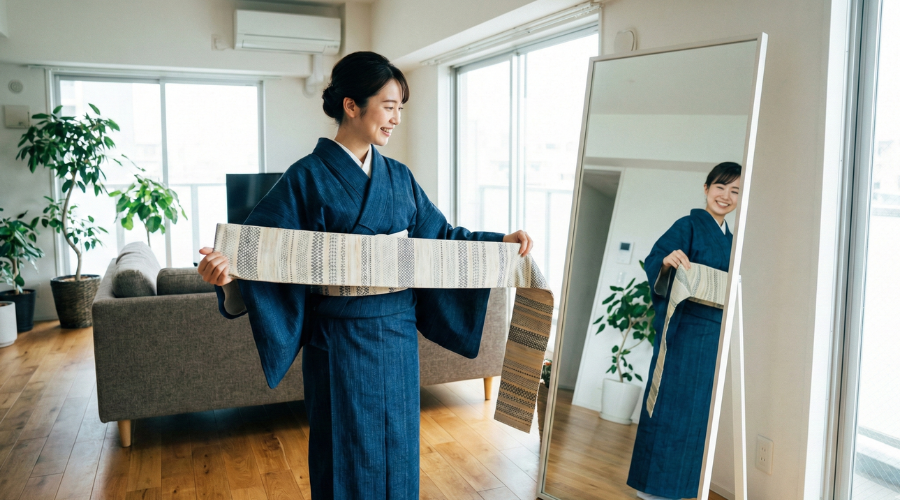
When you’re standing in front of the mirror and second-guessing yourself, run through this in order:
1.Check your kimono type — “Is this a formal hōmongi? No — it’s an everyday komon or tsumugi, right?” ✓
2.Coordinate your obi and accessories — Once you’ve chosen your obi, add one obijime cord. Think of it as your style safety net.
3.Check your knot from the side — Turn sideways and make sure your obi isn’t floating away from your back. If it’s sitting close and flat — you’re good to go.
How to Read the Room: TPO Made Easy
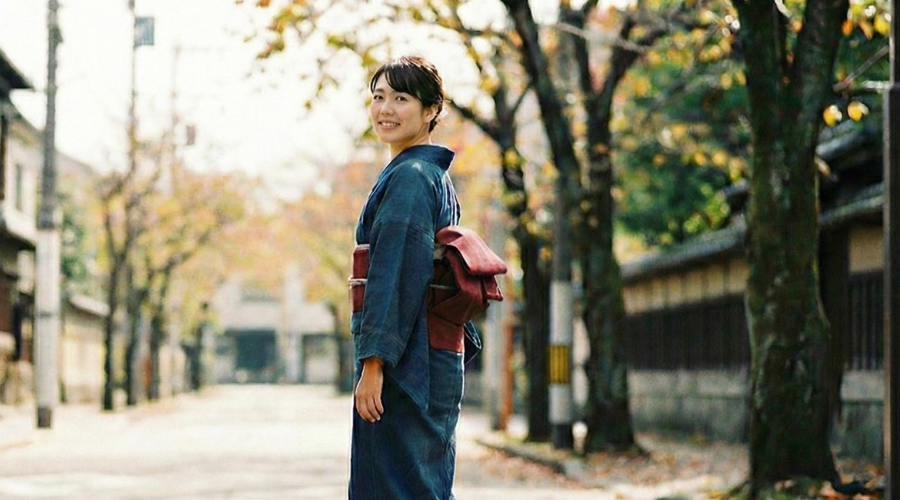
When you’re not sure if a hanhaba obi is appropriate for an occasion, try this trick: think of it like footwear.
Hanhaba obi = stylish sneakers or ballet flats
Nagoya obi (otaiko) = heels or pumps
Ask yourself: “Would sneakers be okay here?”
A hotel lounge or wedding ceremony? Probably not. A café, art museum, or casual restaurant? Absolutely.
Use that instinct and you’ll rarely go wrong.
Wrap-Up
The hanhaba obi is a little bit of magic — it takes the “kimono is complicated and uncomfortable” feeling and replaces it with genuine joy.
✅ Casual kimono (komon, tsumugi)? Wear a hanhaba obi with confidence
✅ Add an obijime cord and it instantly stops looking like a yukata
✅ A flat knot like karuta musubi is both chic and comfortable
Once you’ve got these three things down, there’s nothing left to worry about.
“I’m walking a lot today — hanhaba obi it is.”
“Street food and markets — karuta musubi for sure.”
Pick your kimono the way you’d pick an outfit. Freely, joyfully, and entirely on your own terms.

💡 Bonus tip: Want to elevate the look even further?
The three points above are all you really need — but if you want to add a little extra polish, try adding an *obijime* (decorative cord) and *obiage* (sash). They’re not required, but they pull the whole look together and take it from “casual errand run” to “stylish city outing.”