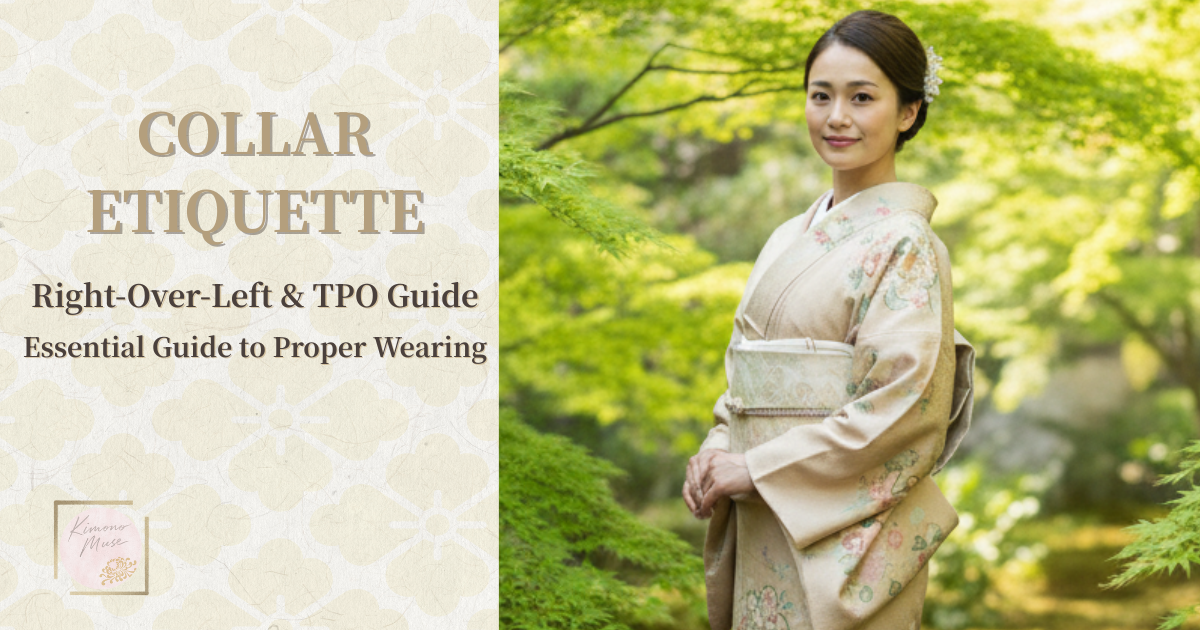
“Wait… which side of a kimono collar goes on top—right or left?”
Have you ever found yourself hesitating in front of the mirror when wearing a kimono after a long time, or when putting on a yukata?
In fact, that small moment of uncertainty can greatly affect the overall beauty of your kimono look.
The way the collar is crossed is especially important. If done incorrectly, it is traditionally considered inauspicious, making this one detail you absolutely want to get right.
In this article, we’ll explain the basics of kimono collar alignment in a way that’s easy for anyone to understand.
We’ll also share the tips that have proven to be the easiest to remember through real dressing experience, along with techniques to adjust the impression depending on the occasion—so be sure to read to the end.
Conclusion: Remember This and You’ll Be Fine — 3 Simple Ways to Check
When you find yourself thinking, “Wait… which side goes on top?”, trying to recall the theory often makes things even more confusing.
In moments like that, instead of relying on logic, try these three visual and movement-based checks that let you decide instantly.
As long as you remember even just one of them, you’ll be able to continue dressing calmly and confidently—without panicking in front of the mirror.
1. Check the mirror: the collar should form a lowercase “y”
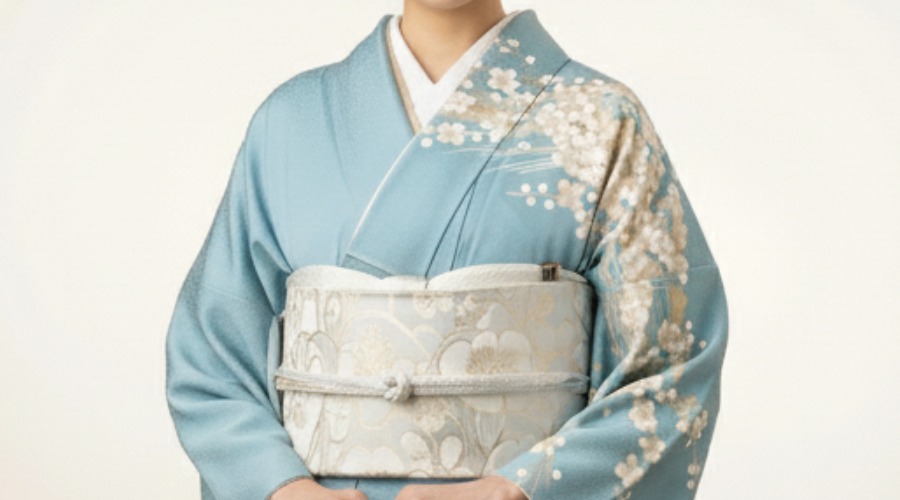
When you look at yourself in the mirror, you’ve got it right if the overlap of the collar forms the shape of a lowercase “y.”
If the sides are reversed (left over right), the shape will look more like the katakana character “ソ.”
A helpful way to remember this is: “y as you see it.”
Thinking “y from your point of view” makes it much easier to recall.
2. Your right hand slips smoothly into the opening
Kimono are traditionally designed so that right-handed people can easily use the inner opening at the chest.
Try sliding your right hand into the opening (the futokoro).
If your hand goes in smoothly without resistance, the collar is aligned correctly.
If your hand catches or won’t go in naturally, the sides are reversed.
A simple way to check is to imagine reaching in to take out a handkerchief.
3. The decorative pattern should be on top
If you’re wearing a kimono with decorative patterns—such as a furisode or homongi—this check is even easier.
Kimono are tailored so that the main, most beautiful pattern naturally appears on the top (outer) layer when worn correctly.
Simply ask yourself, “Which side do I want to show?”
If you let the more beautiful pattern come to the front, the collar will naturally fall into the correct position.
What does “right-over-left” actually mean?
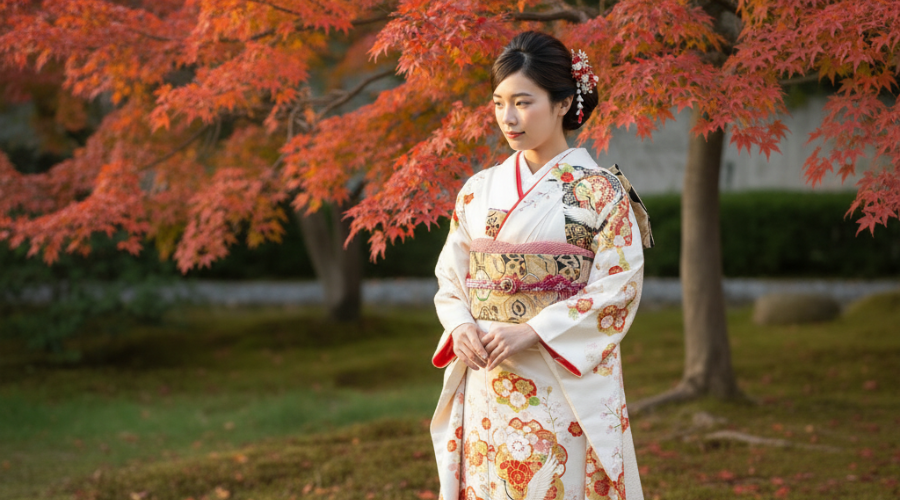
In kimono dressing, the correct way to cross the collar is called “right-over-left.”
However, when you actually put a kimono on, you place the right collar closer to your body, which makes some people think,
“Wait… if the right side goes underneath, why is it called right-over?”
That confusion comes from the word “over” (or mae in Japanese) itself.
Here, “over” doesn’t mean front or back in terms of position.
It means “first.”
So the idea is simple:
- Place the right side first
- Then layer the left side over it
If you remember it as “Right comes first,”
the wording and the actual movement suddenly line up—and the confusion disappears.
Why Wearing a Kimono Left-over-Right Is Avoided
You might think, “Does it really matter which side goes on top?”
But there are solid historical and practical reasons why wearing a kimono right-over-left is considered correct.
1. It was once written into law during the Nara period
This rule actually dates back to the Nara period (8th century), when clothing regulations were established by the state.
Under these laws, people were required to wear kimono right-over-left regardless of gender or social status.
Since then, this style has been passed down for over 1,300 years and remains the traditional standard in Japan today.
2. It’s practical for right-handed people
Kimono are designed to suit the majority of people, who are right-handed.
In the past, there were no bags, so valuables such as hand towels or wallets were carried inside the kimono’s futokoro (the opening at the chest).
When worn right-over-left (with the left side on top), right-handed people can easily slip their hand into the futokoro, making it smooth and natural to take things in and out.
In other words, this style is not only traditional, but also highly practical.
3. Left-over-right is reserved for the deceased
This is the most important reason.
In Japan, wearing a kimono left-over-right is reserved exclusively for the deceased and is used only for burial garments.
Traditionally, there is a belief that the afterlife is a mirror image of this world.
Because of this, those who are departing are dressed in the opposite way from the living—as a symbolic farewell.
That is why, when a living person wears a kimono left-over-right, it is considered inauspicious and a breach of etiquette.
You Can Change the Impression Just by Adjusting the Collar
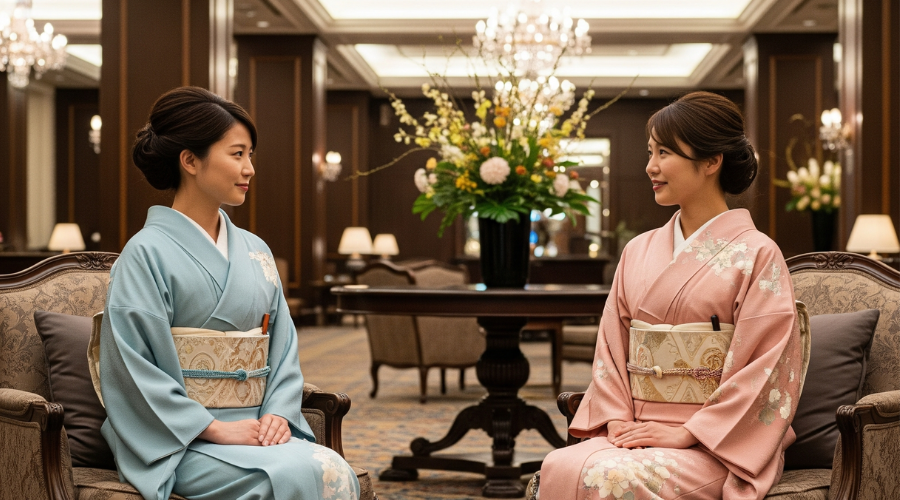
Once you’ve mastered the basic rule of wearing a kimono right-over-left, everything beyond that becomes a space for personal expression.
Just like deciding whether to button a shirt all the way up or leave one button undone, a kimono’s impression can change dramatically simply by adjusting the angle of the collar.
Try making small adjustments in front of the mirror, choosing what feels right for the day’s plans and your mood.
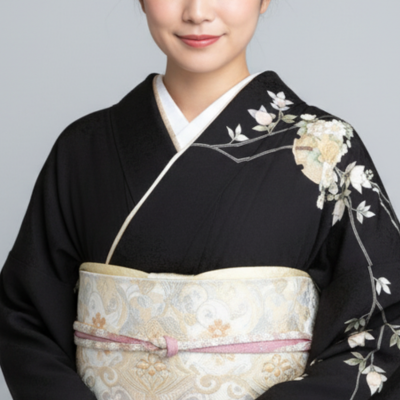
◆For Formal Occasions (Weddings, Coming-of-Age Ceremonies, etc.)
Aim for a clean, refined, and polished impression.
The key is to overlap the collar a little more deeply, so that the hollow at the base of the throat is gently covered.
This creates a sense of neatness and poise—almost as if your posture naturally straightens—resulting in a dignified look that’s perfectly suited to celebratory occasions.
◆For Casual Occasions (Dinner with Friends, Informal Gatherings, etc.)
Aim for a relaxed, effortless elegance.
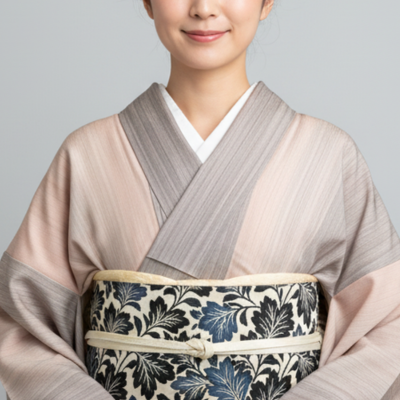
Loosen the collar slightly and create a wider V-shape at the neckline.
This opens up the area around the neck, softening the look and removing any sense of stiffness.
The result is a polished yet easygoing style—perfect for days when you want to enjoy wearing kimono in a relaxed, comfortable way.
【Tip】 Adjusting the Collar to Suit Your Body Type and Age
By adjusting the collar angle to suit your age and body type, the overall balance of your kimono look becomes much more harmonious.
For younger or slender figures, a collar angle closer to a right angle (around 90 degrees) creates a clean, sharp impression.
For more mature wearers or fuller figures, setting the collar at about 60 degrees looks more natural and relaxed, giving an effortlessly refined appearance.
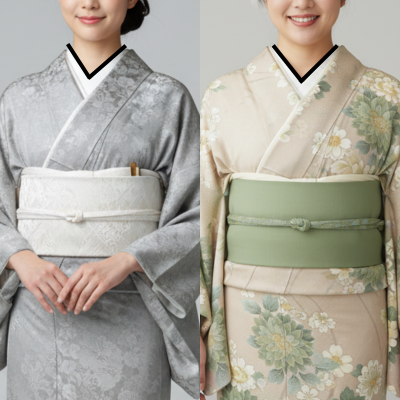
It’s fascinating how even the smallest change in the angle of the collar can completely transform the overall impression.
Once you start adjusting the collar with the occasion in mind, you naturally give off a refined air—people will think, “This person really knows how to wear kimono.”
For example, even with the same homongi, a neatly closed collar creates a dignified, intelligent look, while a slightly loosened collar gives a soft, gentle impression.
Being able to express your personality through these subtle adjustments is one of the true pleasures of wearing kimono—and perhaps the most enjoyable part of all.
Conclusion: Once You Know the Basics, Kimono Become Even More Enjoyable
Before we finish, let’s quickly review the key points you should take home with you.
- If the collar looks like a “y” from your point of view, you’ve got it right.
- If you’re unsure, slide your right hand into the futokoro to check.
- Left-over-right is avoided—wearing right-over-left is a sign of life.
As long as you keep these three ideas in the back of your mind, there’s no need to feel anxious about kimono dressing anymore.
These rules aren’t meant to restrict you.
Think of them as a kind of good-luck charm—something that helps you enjoy wearing kimono with confidence and peace of mind.
Once you’ve checked in the mirror and thought, “All set!”, don’t worry about the small details.
Stand tall, step out with confidence, and enjoy your day in kimono.