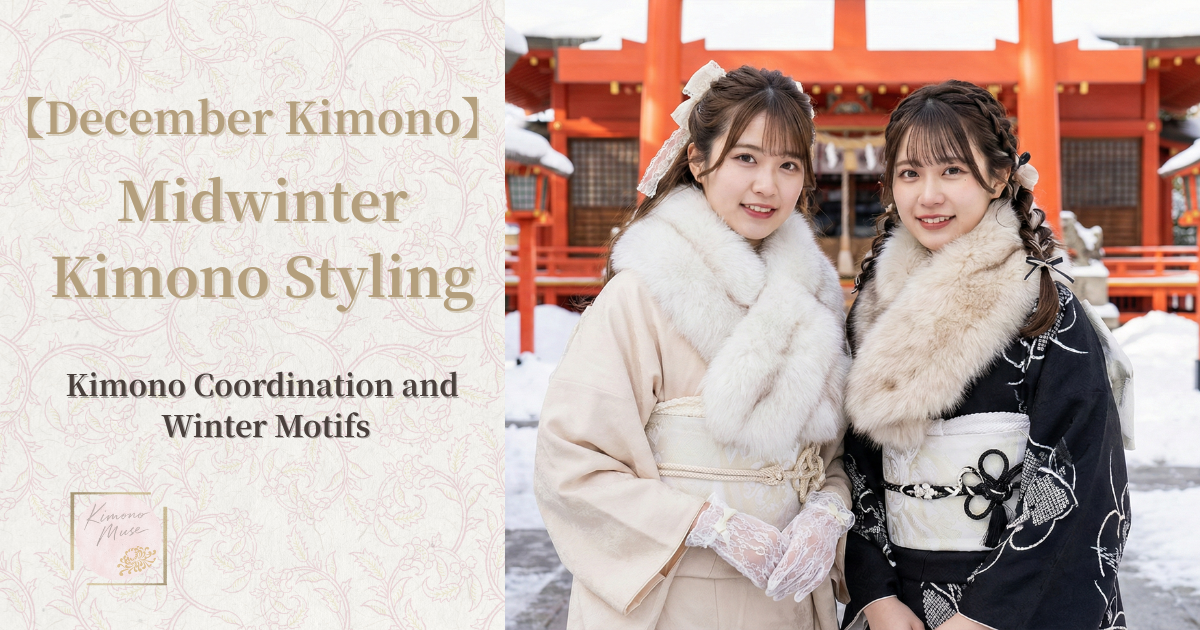
In December, the air feels crisp and clear.
City illuminations and the quiet atmosphere unique to winter make the beauty of kimono stand out even more.
Winter kimono are often avoided because they look “too cold,” but this season actually offers many special pleasures—rich colors, seasonal patterns, and soft, warm accessories that are perfect for winter.
In this article, we introduce coordination tips that look beautiful against December’s city scenery, along with winter motifs that become even more enjoyable once you know their meaning.
Why not embrace the season and enjoy a heart-warming time with kimono this winter?
Recommended Color Palettes for December Kimono
Winter kimono can look much more seasonal and refined just by choosing the right colors.
In December, the air is clear and crisp, so deep, rich colors and playful colors for seasonal events stand out especially well.
Choose colors that match the mood you want to create.
For winter kimono coordination, the following color tones are particularly recommended.
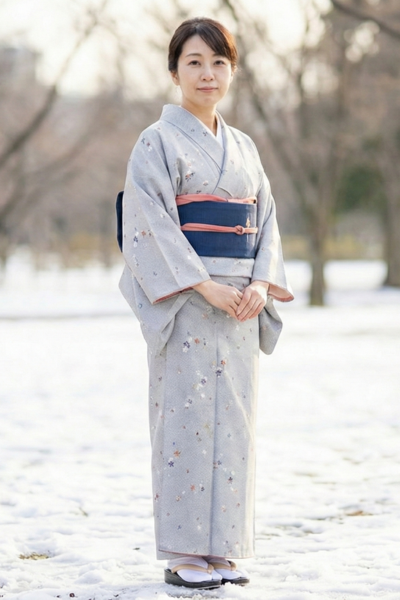
【Chic and Elegant】 Deep, Calm Colors
These refined colors complement the quiet atmosphere of winter and create a mature, elegant look.
◆Gray — A Modern and Sophisticated Impression



◆Purple — A subdued color that pairs beautifully with classic patterns



◆Black — Winter Black with Subtle Nuance



Coordination Examples
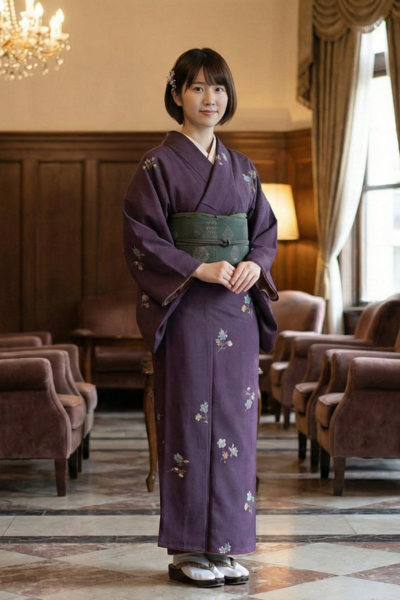
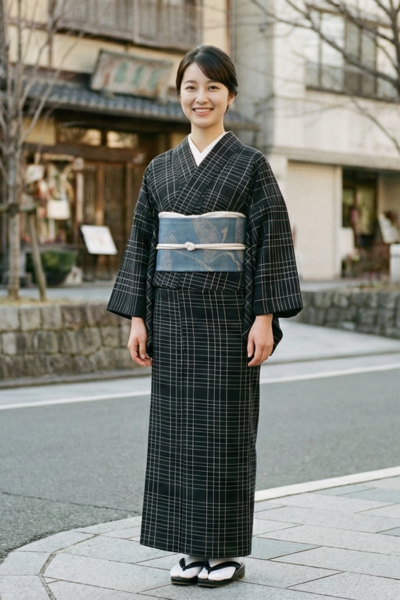
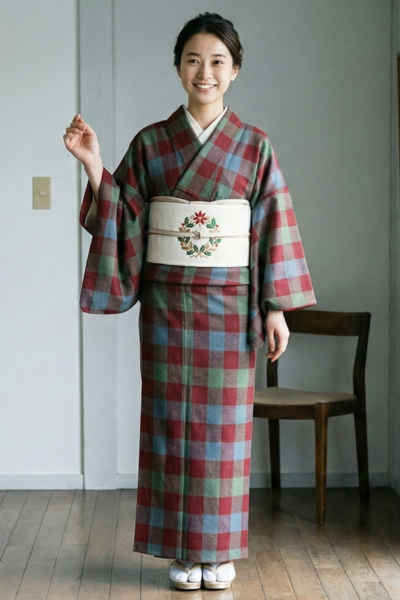
【Enjoy the Season】Christmas Color Accents
One of the special pleasures of December is Christmas.
Adding touches of red, green, white, or gold through small accessories—such as the obijime, obiage, or haneri—is a subtle way to express a playful yet mature sense of style.
◆Red — Calm and easy to use as an accent color for kimono



◆Green — A deep, rich color that blends naturally into winter kimono styling.



◆White — A fundamental color used to highlight and enhance other shades.



◆Gold — When used sparingly, it adds elegance and a refined touch of glamour.



Coordination Examples
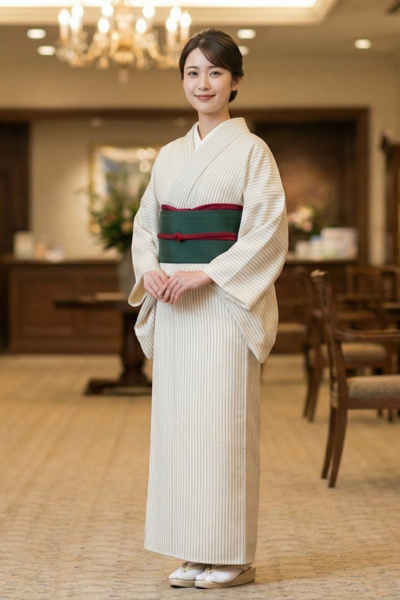
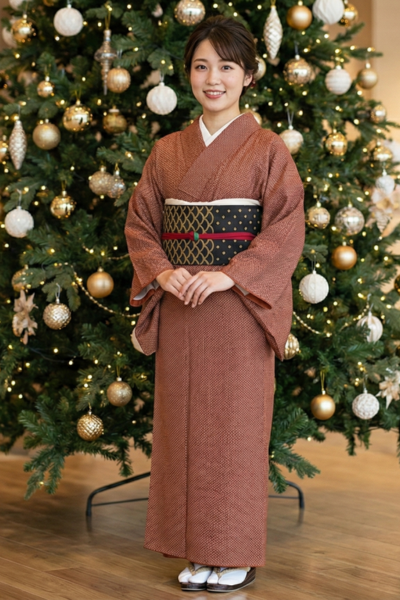
【A Sense of Clarity】 Embracing Bright Colors in Winter
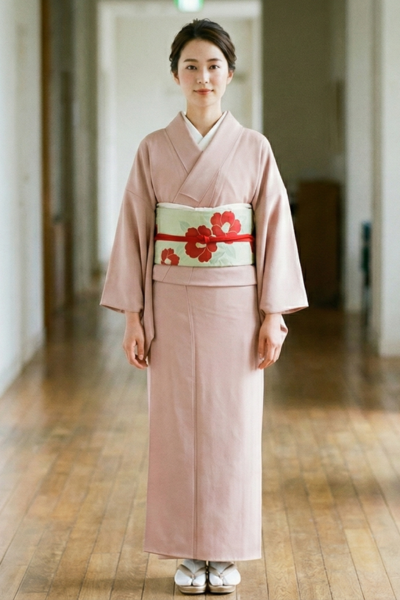
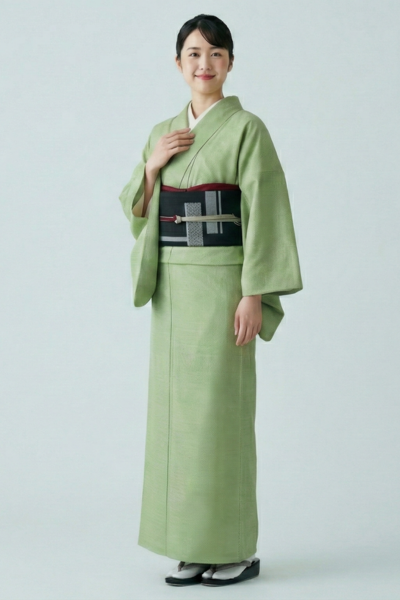
Even in the darker tones of winter, a pop of bright color brings freshness and charm.
◆Pink — Adds a healthy glow and brightens the area around the face.



◆Light Green — A fresh accent that lightens the mood of winter outfits.



◆Pastel Tones — Light hues that harmonize beautifully with winter’s quiet mood.


Coordination Examples
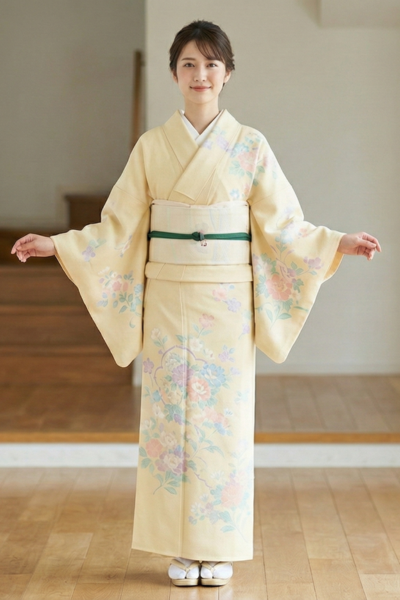
Refined Cool Colors for Winter Styling
- Light blue, asagi blue
- Inspired by winter snow, these colors bring a fresh and graceful feel to December outfits.
◆Light Blue



◆Asagi Blue (Pale Blue-Green)



Coordination Examples
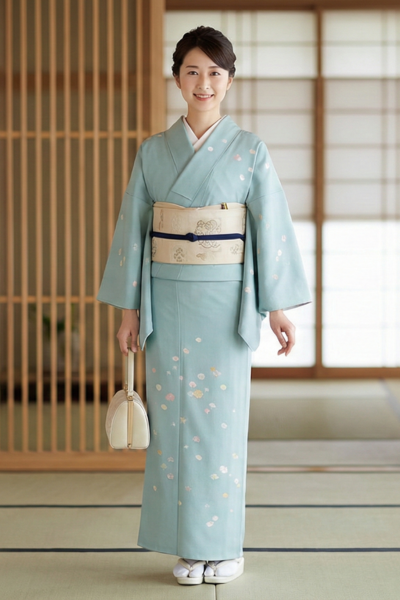
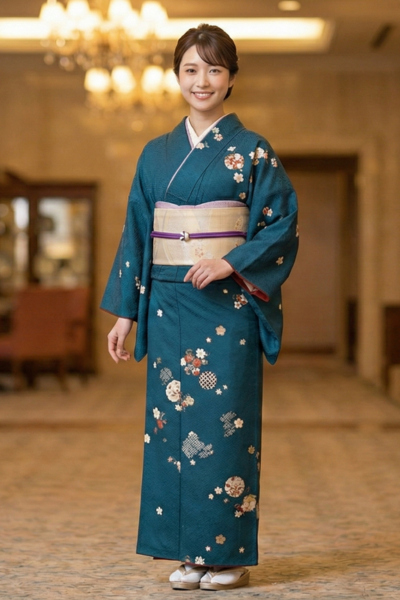
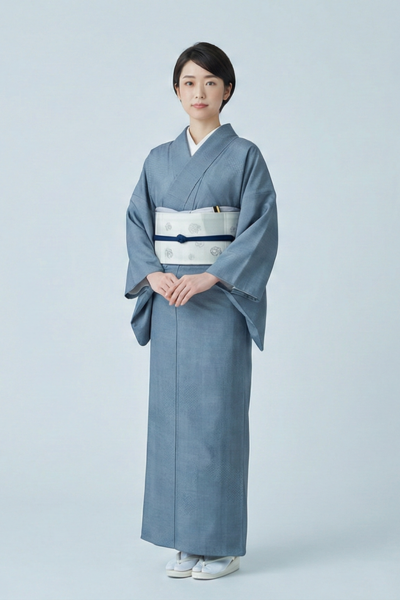
By choosing colors that harmonize with the season’s atmosphere, the unique beauty of kimono in December is brought out even more.
Recommended Motifs for December
Incorporating motifs drawn from winter landscapes and plants is part of the unique charm of kimono.
| Motif | Features & Meaning | Expression in Kimono |
|---|---|---|
 Yukiwa (Snow Rings) Yukiwa (Snow Rings) | A motif inspired by stylized snow crystals, symbolizing purity and tranquility. | Often delicately depicted in pale colors, instantly evoking a winter atmosphere. Commonly used as accents on furisode and obi. |
 Tsubaki (Camellia) Tsubaki (Camellia) | A dignified flower that blooms in cold weather, symbolizing nobility and longevity. | Both large and small patterns stand out, used in both classical and modern designs. A popular motif for furisode. |
 Matsu (Pine) Matsu (Pine) | An evergreen symbol of longevity and prosperity; an auspicious motif. | Used in formal wear as part of traditional patterns such as shōchikubai (pine, bamboo, plum). Adds festive elegance for year-end and New Year occasions. |
 Ume (Plum Blossom) Ume (Plum Blossom) | Represents hope and renewal, blooming despite the cold. | Its rounded petals create a charming look, making it easy to add seasonal accents through obi and accessories. |
 Nanten (Sacred Bamboo) Nanten (Sacred Bamboo) | An auspicious plant associated with warding off misfortune (“nanten” sounds like “turning difficulties away”). | Often used in obidome and small accessories, subtly expressing a winter mood. |
 Suisen (Narcissus) Suisen (Narcissus) | A graceful flower blooming from early to mid-winter, symbolizing modest elegance. | Typically drawn with delicate lines, adding refined seasonal charm to komon kimono and obi. |
 Ōgi (Folding Fan) Ōgi (Folding Fan) | A symbol of good fortune and growth, spreading outward toward prosperity. | Used as a classical motif on furisode and hōmongi, ideal for formal occasions in December. |
 Tsuru & Kame (Crane and Tortoise) Tsuru & Kame (Crane and Tortoise) | Symbols of longevity and celebration;代表的な祝い文様. | Elegantly depicted on furisode and hōmongi, well suited to the festive atmosphere from year-end through New Year. |
 Takarazukushi (Treasure Motifs) Takarazukushi (Treasure Motifs) | A collection of auspicious items symbolizing wealth, happiness, and prosperity. | Often used playfully on obi and accessories, perfectly matching the bright, cheerful mood of December. |
Seasonal Focus: Yukiwa (Snow Rings)
Among the many winter motifs, yukiwa (snow rings) stands out as one of the most popular.
What Is the Yukiwa Motif?
The yukiwa motif is a circular design created by connecting the outlines of snow crystals with soft, flowing curves.
Designs vary widely—from patterns filled with floral motifs to simple styles that feature only the circular outline—offering a rich range of expressions.
Snow has long been called “the spirit of the five grains,” and years with heavy snowfall were believed to bring abundant harvests.
For this reason, yukiwa is also cherished as an auspicious motif that symbolizes prosperity and abundance.
Why the Yukiwa Motif Has Been Loved for Generations
1. A Sense of Ephemerality That Resonates with Japanese Sensibility
Snow that gently falls and quietly disappears embodies a fleeting beauty that deeply resonates with the emotionally rich sensibility of the Japanese people.
2. A Form That Expresses Humility
Unlike a perfect circle, yukiwa motifs often appear slightly incomplete.
This subtle imperfection is said to represent the beauty of what is not perfect and a sense of humility, reflecting a refined and understated aesthetic.
3. Versatile Across the Seasons
While strongly associated with winter, yukiwa is also used in summer as a motif that evokes coolness, often appearing on yukata.
In fact, it is a versatile design that can be enjoyed throughout the year.
Other Snow-Inspired Motifs
In addition to the yukiwa motif, there are many other designs inspired by snow.
All of these motifs express winter scenery and the beauty of snow, and have long been used across kimono, obi, and accessories.
| Motif Name | What Kind of Pattern? |
|---|---|
| Yukimochi-mon(Snow-Laden Motif) | Depicts snow resting on bamboo grass or camellia leaves, evoking a quiet sense of life enduring while awaiting spring. |
| Sekka-mon(Snow Crystal Motif) | A geometric design inspired by snow crystals, resembling delicate, jewel-like patterns. |
| Fubuki(Blizzard Motif) | Expresses snow swirling through the air, creating a sense of movement and a light, wintry atmosphere. |
| Yayuki(Arrow Snow Motif) | Sharp patterns that liken snow crystals to arrow feathers, making it a perfect choice for modern and stylish looks. |
December Kimono Layering: Warmth and Styling Tips
Do you think kimono are cold to wear?
In fact, just like Western clothing, layering the right items allows you to stay comfortably warm.
Warmth You Can See: Outerwear Styling
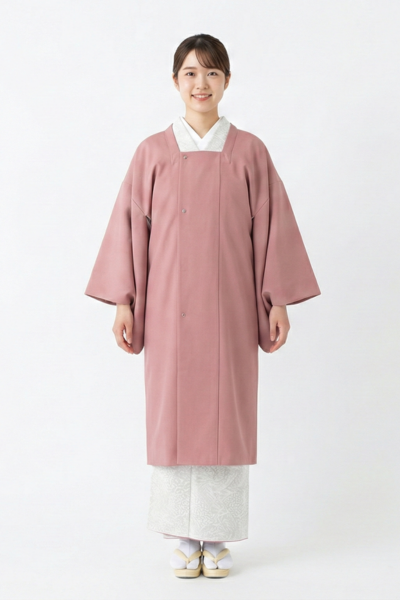
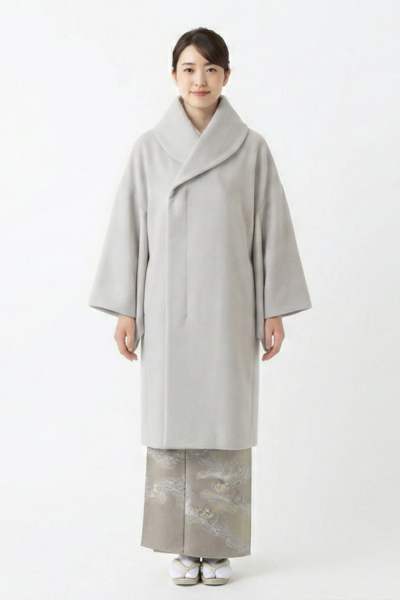
The outermost layer—such as coats and shawls—becomes the “face” of a winter kimono outfit.
Because it is what people see first, choosing the right outerwear is key to both warmth and overall impression.
Kimono Coats (Michiyuki / Dōchūgi)
These coats offer a polished, put-together look and are versatile enough to suit everything from formal occasions to casual outings.
Shawls and Stoles
Large shawls made of cashmere or wool are especially recommended.
Deep winter shades like rich crimson or dark navy add depth and elegance to a winter kimono look.
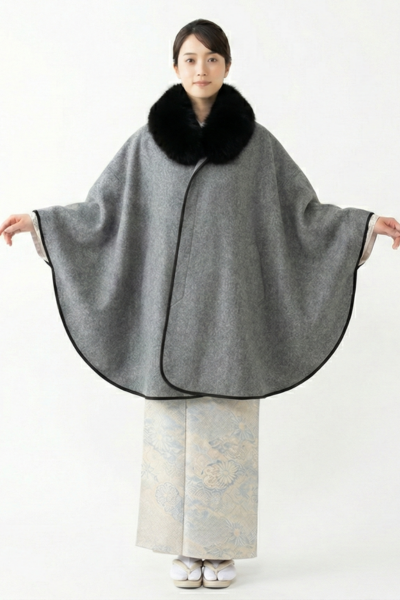
Ponchos and Capes
Many designs can be worn with Western clothing as well.
Because they can be slipped on without putting arms through sleeves, they are easy to wear and remove, making them a practical choice.
Warmth You Don’t See: Inner Layering Tips
Thoughtful adjustments in unseen areas make all the difference in winter kimono comfort.
Heat-Retaining Innerwear
Kimono-specific innerwear with a wide neckline or five-sleeve-length shirts are especially convenient.
Tip: Choose designs with a deeply cut back so the inner layer does not show at the emon (the back neckline of a kimono).
Keeping Your Feet Warm
Thermal tabi socks, tabi inner socks worn underneath, and fleece-lined tabi are all excellent options for protecting your feet from the cold.
For a more detailed guide to kimono winter innerwear and layering techniques, we explain everything in a separate article.
▶ “Complete Guide to Winter Cold-Weather Solutions for Kimono”
By layering these small adjustments, winter outings become far more comfortable.
Don’t let the cold hold you back—enjoy the beauty of kimono even in the winter season.
Conclusion
As long as you prepare properly for the cold, kimono in December become a wonderfully appealing fashion—one that allows you to fully enjoy the deep winter colors and the beauty of snow-inspired motifs unique to the season.
“It’s Christmas today, so I’ll add a red obijime,” or “It looks like it might snow, so I’ll choose a yukiwa obi.”
Try selecting your coordination as if you were having a quiet conversation with the surrounding scenery.
With a warm coat and your favorite kimono, why not step out into the winter streets and enjoy the season?